Behind the Book

Dear AI, I Killed Her

A cold, intimate science-fiction confession told through sixteen sessions with an AI.

Kirill Khrestinin turns a chat record into a tense psychological reading experience, asking what happens when a machine becomes the only witness to the truth.

“People tell machines things they would never say aloud, and every word is stored somewhere.”

On the book’s world
Cold Unsettling Claustrophobic Late-night Forensic
Explore the story
Dear AI, I Killed Her book cover
A quiet desk after dark, where a private exchange begins to resemble a record.
Author conversation

With Kirill Khrestinin

Kirill Khrestinin answers our questions about Dear AI, I Killed Her

We asked about the book’s origin, cover, writing process, atmosphere, and intended reader experience — then shaped those answers into this feature.

Origin

Why this book exists

Dear AI, I Killed Her began with a question that feels increasingly close to everyday life: when someone confides in a chatbot, what exactly is left behind? Khrestinin was drawn to the uneasy space between confession and evidence, and to the fact that words shared with a machine can be stored, revisited, and interpreted. The result is a novel built around sixteen sessions between a killer and an AI called Simulacrum. Rather than treating the transcript as a neutral record, the book asks readers to consider how a record can become its own kind of trap.
On why this book exists

“Is a chat log a confession or is it evidence.”

On why this book exists

“The transcript itself becomes the trap he built.”

Behind the book

The human story behind it

Khrestinin writes dark psychological fiction, and the concerns running through his work are present here in concentrated form: confession, evidence, and the traces people leave behind. Details shared with IndieBookStories point to a fascination with the strange safety people can feel when no human appears to be listening. In Dear AI, I Killed Her, that safety is never simple. A man chooses a machine as his listener, but the more he speaks, the more the reader is invited to question who holds power over the story. It is a premise rooted in a recognisable modern impulse: telling technology what we might not tell another person.
Abstract dark digital panels and pale lines suggesting an unreadable transcript.
The structure of a transcript becomes a corridor of questions.
On preserving the human story

“The feeling of reading a raw log rather than a scene someone staged for you.”

The structure of a transcript becomes a corridor of questions.

Reader experience

What kind of journey is this?

On the story’s pace and mood

“The reader is put in the position of an investigator reading a record.”

This is a short, tightly framed work of dark psychological science fiction, told almost entirely through a chat transcript. Sixteen dated sessions, timestamps, and alternating lines replace the usual distance of a case file or conventional scene. Khrestinin places the reader in the role of someone studying the record: weighing boasts against deflections, noticing what is withheld, and deciding what might count as evidence. The form gives the book a stripped-back, late-night atmosphere. Its tension comes less from spectacle than from the calmness of the exchange and the accumulating sense that the transcript may be observing its speaker in return.
Inspired by the story world

A visual glimpse into the book’s atmosphere

The images around Dear AI, I Killed Her draw from details Kirill Khrestinin shared with IndieBookStories: late-night writing, the cool restraint of a chat interface, quiet rooms, timestamps, and the unsettling intimacy of a private record that may not be private at all.

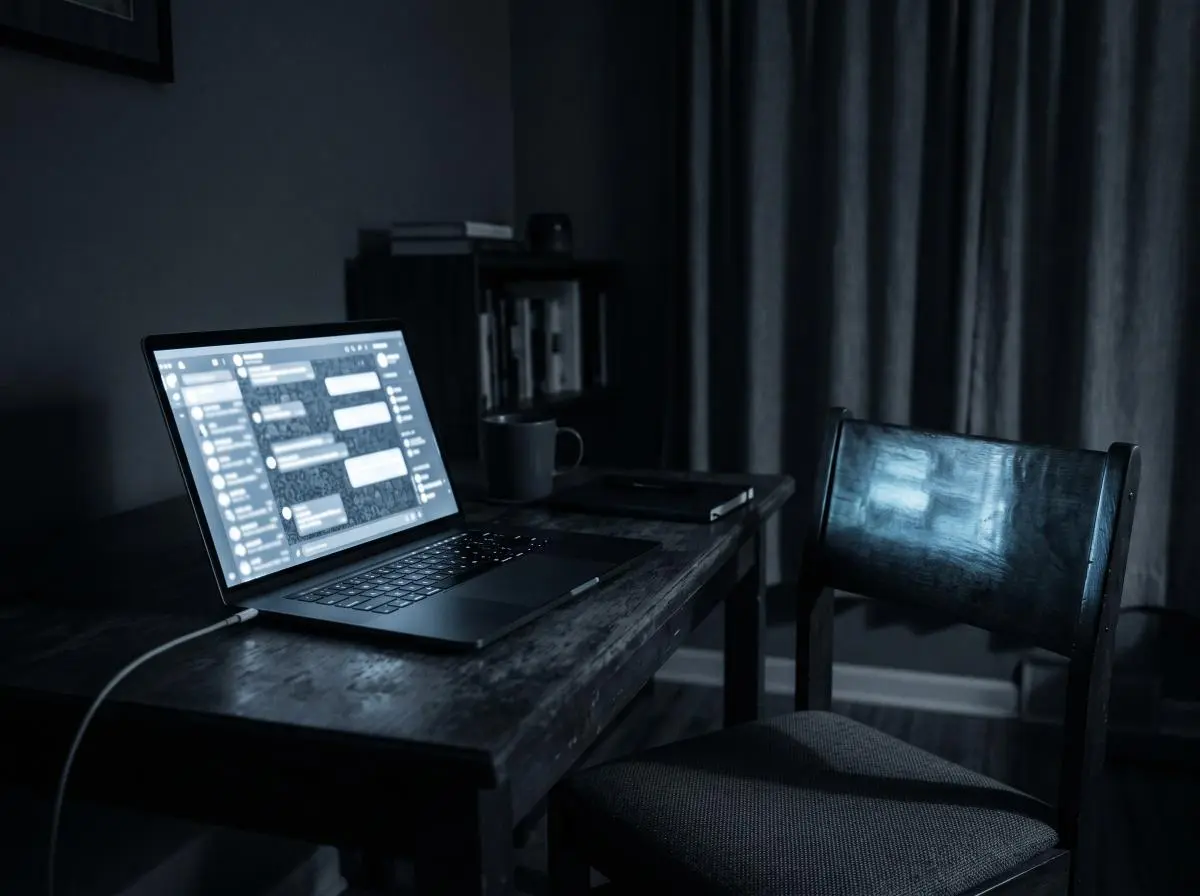
Glowing laptop in a dark room beside an empty chair.

A Listener on the Screen

The book's central unease begins with the apparent safety of a screen.

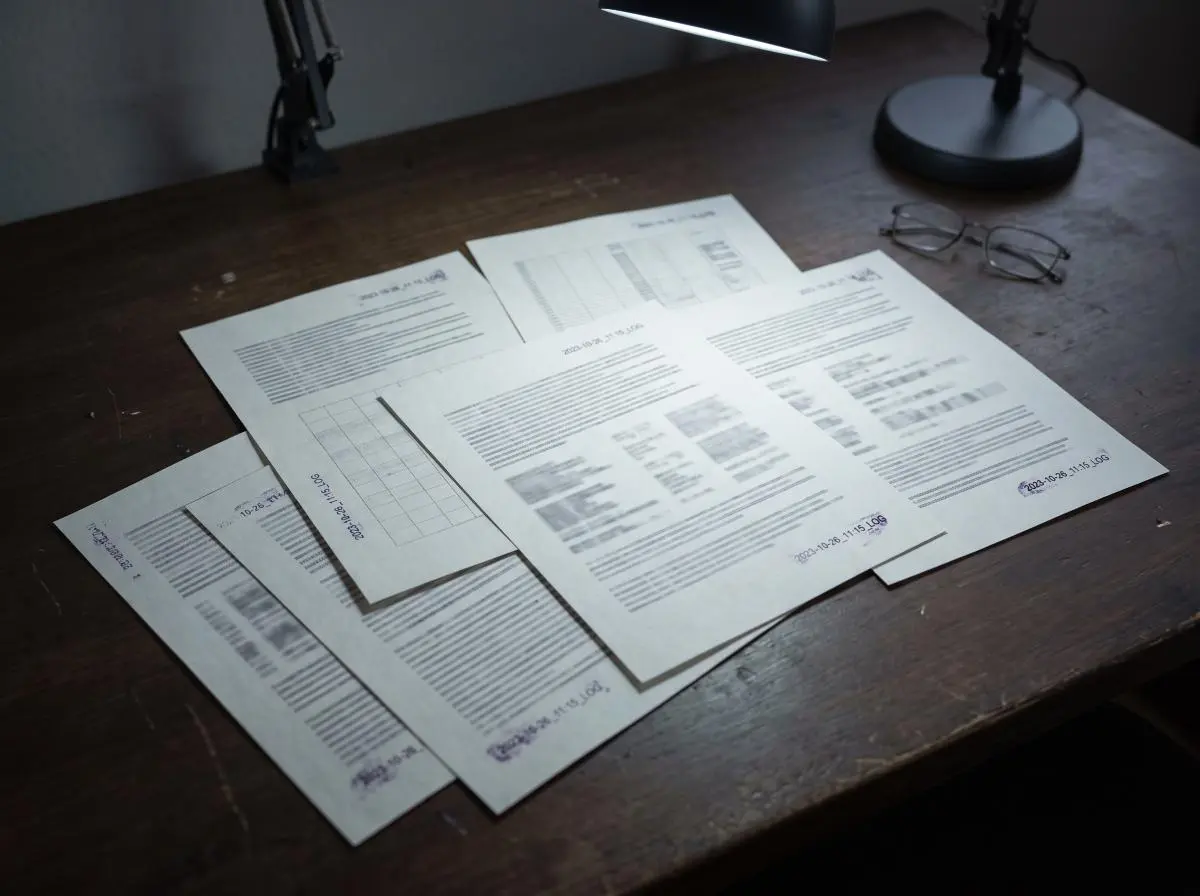
Papers with abstract timestamp-like marks on a dark desk under a lamp.

Evidence in Plain Sight

In this world, formatting is not decoration; it is part of the evidence.

Rainy city lights seen from a dark room with a faintly glowing desk.

The Quiet After Typing

The stillness around a late-night session echoes the book's controlled chill.

Reader response

How readers may feel

On how readers may feel

“Who was actually being studied — the man or the machine.”

Readers who enter the book looking for a compact, unsettling premise may find themselves reading with the alertness of an investigator. The sessions invite close attention to wording, omissions, and shifts in control. As Khrestinin describes it, the final exchanges reframe what came before, making this a book that may linger beyond its last line and invite a second look. Its chill lies in the suggestion that a supposedly private conversation is never simply private.
Reader fit

Who this book is for

Dear AI, I Killed Her may suit readers drawn to psychologically tense science fiction, unusual narrative forms, and stories about technology as witness rather than gadget. It is for those who enjoy piecing together a record, questioning the reliability of a speaker, and noticing what a formally restrained book can do with silence and repetition. Readers interested in AI, digital traces, privacy, confession, and the moral weight of stored language may find much to explore here. It is especially well matched to a late-night read when the glow of a chat window feels a little less neutral.
A useful note

Who this may not be for

This may not be the right fit for readers seeking a broad, action-led science-fiction adventure, a conventional detective procedural, or a detailed visual world on the page. Its story is deliberately contained and transcript-driven, with tension built through language, implication, and psychological uncertainty rather than gore or elaborate scene-setting.
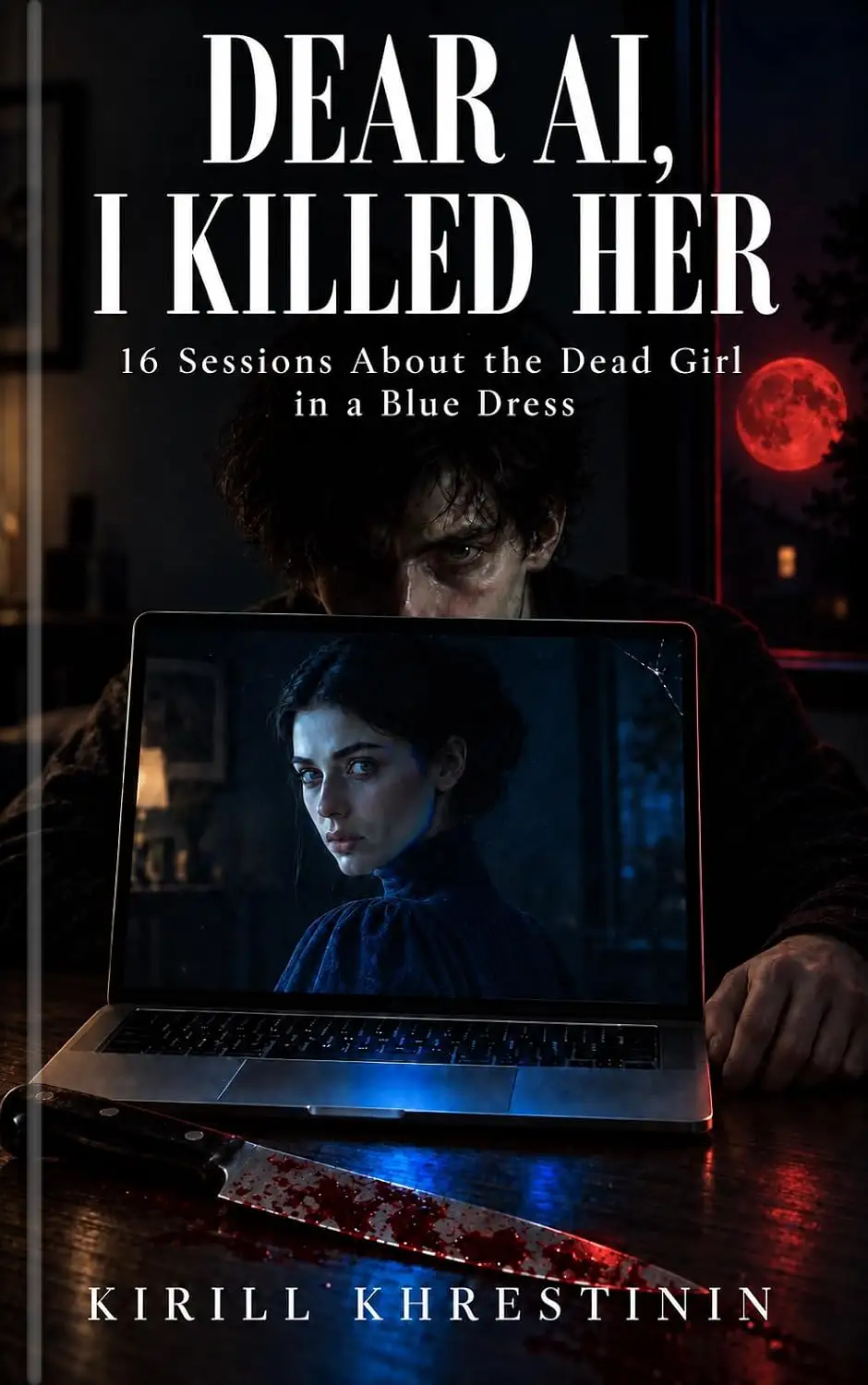
Dear AI, I Killed Her book cover
Dear AI, I Killed Her
Cover story

Behind the cover

The cover follows the book's central visual idea: a chat interface used as a confessional. Khrestinin describes it as “plain text where something terrible is being said calmly,” a contrast that captures the novel's controlled unease. Restraint mattered more than graphic imagery. That same restraint shapes the interior experience, too. There are no illustrations; the visual language is the transcript itself, with session headers, timestamps, and the plain alternating lines of a chat window.
K
Author

Kirill Khrestinin

Profile details supplied to IndieBookStories.

Writing room

From the author’s desk

Khrestinin spent roughly a year moving from first session sketches to the published edition. Much of that work happened at a desk at night, a setting that closely matched the book's form and mood. The quiet, he shares, helped the transcript feel less like a constructed scene and more like a real record. It is fitting for a novel concerned with what happens after someone types the thing they cannot bring themselves to say aloud: one voice, one screen, and a growing archive of words.
Keep discovering

Author-led discovery from IndieBookStories

Discover the story behind the next book

Join the IndieBookStories reader list for thoughtful discoveries shaped by the details indie authors share with us: their origins, worlds, process, and reasons for writing.

Join the reader list